
Draft Showdown
VOODOOStrategy
3.92.78K Reviews
- Version
- 1.22.0
- Installs
- 1.00M
- Age Rating
- Teen
Screenshots
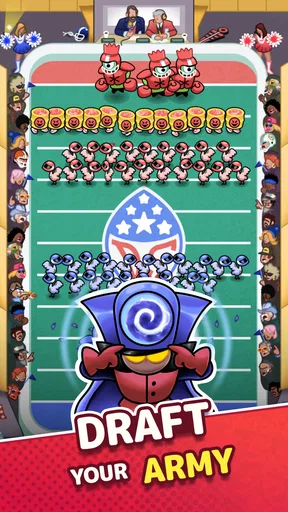
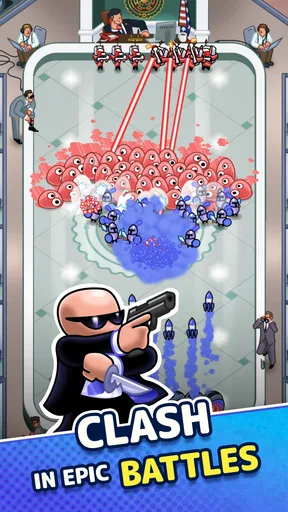
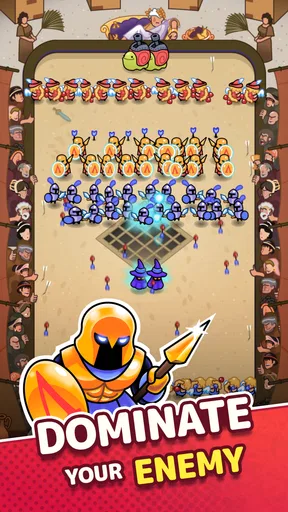
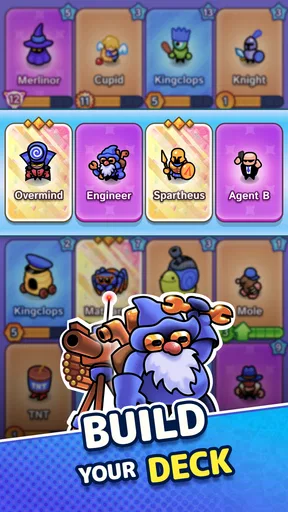
Our Review of Draft Showdown
 Analysis by Appyee
I went into Draft Showdown expecting a quick strategy game, and that is exactly where it fits best: short bursts of planning followed by immediate battles. The basic appeal is easy to understand. You make decisions about an army, watch those choices meet an opponent, learn from the result, and then feel the pull to try again with a better plan. That cycle is more important here than any single match.
Developed by VOODOO, this free strategy game is aimed at players who enjoy making tactical choices without committing to a long campaign. It is available for devices running Android 8.0 or later, carries a Teen age rating, and has reached over a million installs. The current version is 1.14.1, while its average score sits at 4.1 from around 28 thousand ratings. Those figures suggest a game with a substantial audience, but they do not remove the need to decide whether its particular rhythm suits you.
How the draft turns one decision into a battle
I find the draft most interesting when I treat it as a commitment rather than a search for the strongest-looking pick. This section looks at how that small choice shapes the battle and why a quick, deliberate review afterward can make the next attempt more informative.
The first action is choosing with incomplete information
The most important moment in each attempt is not the clash itself. It is the draft that comes before it. You are asked to shape an army from the options presented, and that makes every selection feel like a small commitment. A strong choice in isolation may not be the best choice for the group you are building, so I found myself thinking less about individual power and more about how the pieces might work together.
That distinction gives the game its strategy identity. In a conventional action game, the first meaningful decision may be movement or aiming. Here, the first action is closer to assembling a plan and accepting that the plan may have weaknesses. You are not simply collecting the most impressive-looking option every time. You are trying to avoid creating an army that is powerful in one way but unable to respond when the opposing force exposes a gap.
This makes the opening seconds useful even when the match is brief. I could look at a draft and immediately ask practical questions: do I have enough variety, am I overcommitting to one approach, and will this group still make sense once the battle begins? The game does not need a long tutorial speech to create that tension. The draft itself supplies it.
For a new player, my advice is to resist restarting mentally after every imperfect choice. Early attempts are valuable because they show what happens when an army is too narrow or poorly balanced. Instead of chasing a perfect lineup immediately, pay attention to which kind of weakness becomes visible during the fight. That observation is often more useful than remembering which single unit looked strongest.
The battle provides fast feedback rather than a long explanation
Once the army is drafted, the game moves quickly into the clash. That transition is one of its strengths. There is not much distance between making a choice and seeing its consequence, so the connection between planning and outcome remains clear. If the battle goes well, the draft feels smart. If it falls apart, the reason to reconsider the next army is obvious.
This creates a satisfying feedback rhythm: choose, watch, interpret, and adjust. I like that the result does not require a separate spreadsheet or a long post-match analysis to feel meaningful. The battlefield acts as the explanation. You can see whether your army has enough balance and whether your earlier assumptions were realistic.
The rhythm also keeps the game approachable for people who enjoy strategy but dislike complicated interfaces. Draft Showdown is not asking me to manage a large map, maintain a long technology tree, or remember dozens of systems between sessions. Its focus is narrower: make a compact army and see whether the idea survives contact with another force.
That simplicity has a trade-off. Players who want deep control during every second of combat may find the experience less satisfying than a more traditional real-time strategy game. The pleasure here comes mainly from preparation and reaction, not from manually directing every movement. If you prefer to win through constant tactical commands, a full battlefield strategy title will probably give you more to do.
Why losing can still make the next draft interesting
A loss is most useful when it changes the way I approach the next attempt. Draft Showdown benefits from making failure feel like information rather than a dead end. A poor result encourages a different composition, a more cautious reading of the available choices, or a decision to stop favoring one familiar pattern.
One practical habit helped me get more from the game: after a defeat, I tried to name one specific problem before starting again. Was the army too dependent on one type of strength? Did I ignore a useful option because it looked less attractive at first? Did I build around a plan that never had a chance to develop? Limiting the review to one question prevents the quick reset from becoming mindless repetition.
This is also where the game can appeal to players who enjoy small experiments. You do not need to treat every match as a serious test of skill. You can deliberately try a different style and see how the result changes. That makes the draft feel like a laboratory for short strategic ideas rather than merely a gate before the action.
The reward is the urge to improve, not just the outcome
The clearest reward in this kind of game is the feeling that a better decision is within reach. Winning confirms a plan, while losing suggests that another arrangement might work. That is a modest but effective reward structure because it gives both outcomes a possible role in the next session.
I especially enjoyed the moments when a small change in the draft produced a noticeably better battle. Those moments make the game feel responsive even when the overall rules are easy to understand. The satisfaction comes from connecting the improvement to my own decision instead of simply waiting for a larger unlock or a longer narrative payoff.
There is also a useful difference between immediate reward and long-term motivation. The immediate reward is seeing the army perform well. The longer-term motivation is learning which choices deserve trust and which attractive options create problems later. Players who enjoy pattern recognition will probably get more from this than players who need a constant stream of new story content.
Because the game is free, it is easy to try without making an upfront purchase. It does include optional in-app purchases, with individual items ranging from $0.99 to $99.99. I would approach those carefully. The core question is whether you enjoy the draft-and-battle loop on its own; spending money should not be the reason the loop becomes interesting. Anyone sensitive to purchase prompts should check the device’s purchase controls before handing the game to a younger player, especially since the content rating is Teen.
The reset is what makes another session tempting
After a battle, the reset is quick enough to preserve the thought that led to the result. I do not have to wait long before considering another draft, and that is central to the game’s design. A slow reset would weaken the connection between mistake and correction. Here, the next attempt feels close enough to the previous one that I can test a revised idea while the lesson is still fresh.
This makes the game suitable for ordinary gaps in the day. I can imagine playing during a short break, finishing a few attempts, and putting the phone away without needing to remember a complicated campaign state. It also works when I want something more thoughtful than a reflex game but less demanding than a long strategy session.
The same convenience can become a weakness. Because the restart is so easy, it is possible to slide into automatic retries without learning anything. The game does not magically turn repetition into strategy. The player has to pause for a moment and identify what should change. Without that pause, the loop becomes draft, battle, loss, restart, and another nearly identical draft.
My best use of the reset was to change only one important decision at a time. If I altered the whole army after every result, I could not tell which adjustment helped. Keeping most of the plan intact while testing one different choice made the feedback easier to read. That approach is particularly useful for newcomers who feel overwhelmed by several possible options.
Where it fits among strategy alternatives
Draft Showdown sits between a traditional strategy game and a quick competitive puzzle. Compared with a large-scale strategy title, it asks for less preparation, has a smaller decision space, and gets to the result faster. That makes it friendlier for casual play and easier to revisit. The cost is that it does not offer the same sense of building an empire, controlling a wide map, or directing a battle minute by minute.
Compared with a pure auto-battler, its emphasis on the draft gives the player a clearer feeling of authorship. You are not merely watching numbers resolve; the army begins with your choices. At the same time, anyone looking for extensive character development, a substantial campaign, or a large collection of interconnected systems may find the experience lightweight.
It is also different from a reflex-focused action game. Your hands are not constantly busy during the clash, so the tension comes from anticipation and interpretation rather than rapid input. I would recommend it to someone who likes asking, “What should I assemble?” more than someone who wants to ask, “Can I execute this move quickly enough?”
A realistic everyday session
Imagine having ten minutes before leaving for an appointment. You open the game, make a draft, and watch the battle resolve. If the result is poor, you can use the remaining time to alter one part of the army and test the idea. There is no need to start a long campaign or remember a complicated objective. The session has a natural beginning, a clear result, and a convenient stopping point.
That same structure works during a commute or while waiting for food, provided the player is comfortable with the game’s battle flow and has a suitable connection for the experience. I would not choose it for a quiet, uninterrupted evening when I want a rich strategic world to explore. I would choose it when I want a compact decision-making exercise that can produce a satisfying result quickly.
Who should play and who should skip it
Draft Showdown is a good fit for players who enjoy short strategic experiments. It suits people who like assembling a team, seeing the consequences, and refining the plan without spending hours on one match. It is also a reasonable entry point for someone curious about army-drafting games but not ready for a more complicated strategy system.
I would be more cautious recommending it to players who need direct control throughout combat. If the fun for you comes from issuing constant commands, positioning individual units, and turning a battle around through precise timing, this may feel too hands-off. It may also disappoint players who expect a deep story or a large progression structure from every strategy game.
The Teen rating is worth considering for families. A parent should look at the game personally before allowing a younger player to use it, and the optional purchases make device-level spending safeguards sensible. The free entry point makes trying it simple, but free does not mean every part of the experience is detached from monetization.
Small habits that improve the experience
First, treat the draft as a complete plan rather than a shopping list. A choice that seems weaker by itself may make the overall army more dependable. I got better results when I considered how the options complemented one another instead of selecting whatever looked most powerful at a glance.
Second, use defeats to create a controlled experiment. Keep the main shape of the army and change one meaningful element. This turns the short reset into a learning tool and makes the feedback more reliable. It is a simple habit, but it prevents the game from becoming a sequence of unexplained wins and losses.
Third, recognize when you are retrying out of habit. If the last few drafts have been nearly identical, stop and change your question rather than merely changing a selection. Ask whether your entire approach is too narrow. That is often more productive than searching for a single perfect option.
Finally, decide what kind of session you want before opening the game. If you want a quick test of judgment, it is well suited. If you want a long-form strategy project, choose another game instead. Knowing that distinction keeps the compact design from feeling like a limitation when it is actually the point.
My final view of the loop
What keeps me returning is the clean sequence of action, feedback, reward, and reset. I draft an army, watch the plan meet resistance, take a lesson from the result, and immediately have a reason to try again. The loop is simple, but it is not empty when I pay attention to the decisions inside it.
Its strongest quality is the short distance between thought and consequence. Its biggest limitation is the same thing: players who want broader worlds or more control may run out of depth sooner. The game works best when approached as a focused strategy snack rather than a replacement for a full-scale strategy experience.
With a free entry point, a sizeable player base, and a clear emphasis on quick army decisions, it is easy to recommend trying if you enjoy tactical drafting. I would keep expectations focused on the battle loop, watch spending around the optional purchases, and give each reset a purpose. If you do that, Draft Showdown offers a compact reason to play one more round without pretending to be something larger than it is.
Privacy and Permissions
See what permissions an app requests and how it handles your data.
- Wi-Fi connection information
- view Wi-Fi connections
- Other
- view network connections, full network access, control vibration, prevent device from sleeping, Google Play license check
Verdict
Strengths of Draft Showdown
- Quick matches make it easy to play during short breaks.
- Simple controls are accessible for both casual and experienced players.
- Different draft choices add variety and replay value.
- Competitive battles provide a satisfying challenge.
- Bright visuals make the action easy to follow on mobile screens.
Limitations of Draft Showdown
- Matchmaking may feel uneven when facing more experienced players.
- Progress can become slower without regular play or upgrades.
- Limited content may reduce long-term variety for some users.
- Online matches depend on a stable internet connection.
- Some rewards or features may encourage in-app purchases.
Other Releases by VOODOO
View All


Similar Picks in This Category
View All
Clash of Clans
Supercell4.5

Plants vs. Zombies™
ELECTRONIC ARTS3.7

Lords Mobile: Kingdom Wars
IGG.COM4.5

Clash Royale
Supercell4.4

State.io — Conquer the World
CASUAL AZUR GAMES4.1

Car Driving School : Car Games
Spark Game Studios3.9
Frequently Asked Questions
What is Draft Showdown and how does the game work?
Draft Showdown is a competitive card-drafting game in which players build a deck by selecting cards from rotating choices, then use those cards to battle opponents. Each pick matters because it affects your strategy, available combinations, and response to enemy tactics. Matches generally reward careful planning, efficient resource use, and adapting your deck rather than simply choosing the strongest-looking card every time.
Is Draft Showdown free to download and play?
Draft Showdown can generally be downloaded without paying an upfront purchase price, but availability of optional in-app purchases may depend on the platform and region. These purchases can include cosmetic items, extra resources, or other convenience features. Before installing, it is worth checking the store listing for current pricing and reviewing the game’s purchase settings, especially if children may use the device.
Does Draft Showdown require an internet connection?
An internet connection may be needed for important features such as matchmaking, account synchronization, events, updates, and leaderboard access. Some parts of the game may load without a connection, but offline functionality can be limited or unavailable. For the smoothest experience, use a stable Wi-Fi or mobile-data connection, particularly during competitive matches where interruptions could affect progress or results.
Is Draft Showdown suitable for beginners?
Draft Showdown is approachable for new players, although its drafting and competitive systems can take time to understand. Beginners should expect to learn through practice, experimenting with card combinations, and observing which strategies work against different opponents. The early experience is usually more enjoyable when players focus on understanding card roles and resource management instead of trying to win every match immediately.
What should I check before downloading Draft Showdown on Android or iOS?
Before downloading Draft Showdown, check that your phone or tablet meets the game’s operating-system and storage requirements. Also review the latest store description for supported devices, online requirements, account policies, advertisements, and in-app purchases. Because game features can change through updates, confirm that the current version is available in your region and that you have enough free storage for future patches.
Play our best games!


